Seeing blood in the urine is frightening. The good news: the cause is often not serious. The bad news: it can sometimes be the only early sign of a serious disease. That is why saying "it passed" and ignoring it is the most wrong reaction. Blood in the urine is a finding that must be assessed.
What is hematuria?
The presence of blood in the urine is called "hematuria" in medicine. There are two types:
- Visible (macroscopic) hematuria: Urine that is pink, red or tea/cola colored.
- Non-visible (microscopic) hematuria: The urine looks normal to the eye, but blood cells are detected on testing.
Both situations should be investigated — especially visible blood.
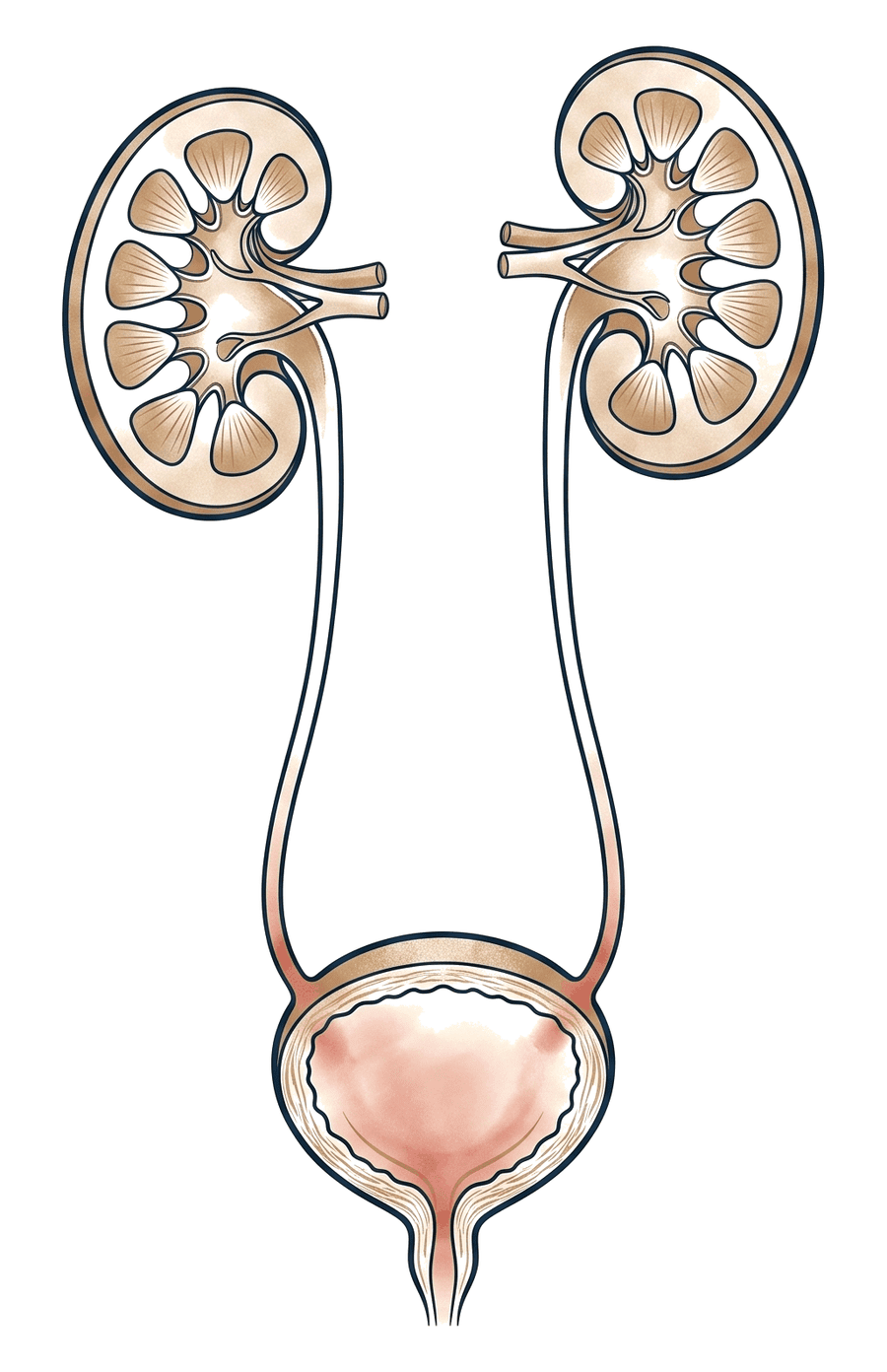
Why does it happen?
Blood in the urine has many possible causes; most of them are benign:
- Urinary tract infection
- Kidney or urinary tract stone
- Benign prostatic hyperplasia (BPH)
- Intense exercise (temporary)
- Certain medications or blood thinners
- Bladder, kidney or urinary tract tumors — rarer but the most important cause
The most critical point: painless blood
The situation to pay special attention to is painless visible blood in the urine. The absence of pain does not make it unimportant — on the contrary, this is exactly the most common first sign of bladder cancer: blood seen suddenly, without any pain, that can then disappear. Postponing with the thought "I had no pain, it passed on its own" is the riskiest approach.
Even if blood in the urine is seen once and disappears, it must be investigated. It often turns out to be benign — but only investigation can tell.
How is it assessed?
Assessment is fast and clear; it usually includes:
- Urine test and culture: To confirm infection and blood.
- Imaging (ultrasound / tomography): To examine the kidneys and urinary tract.
- Cystoscopy: Direct imaging of the inside of the bladder with a thin camera — the most definitive way to assess bladder-origin causes.
When should it not be delayed?
If you have seen visible blood in the urine — painful or painless, persistent or once — do not postpone the assessment. If fever, severe flank pain or inability to urinate accompanies it, the situation is an emergency. If you smoke or are over 40, you should be even more careful about blood in the urine.