One of the most common cancers in men — but when caught early, the treatment success rate is very high. The key: regular check-ups.
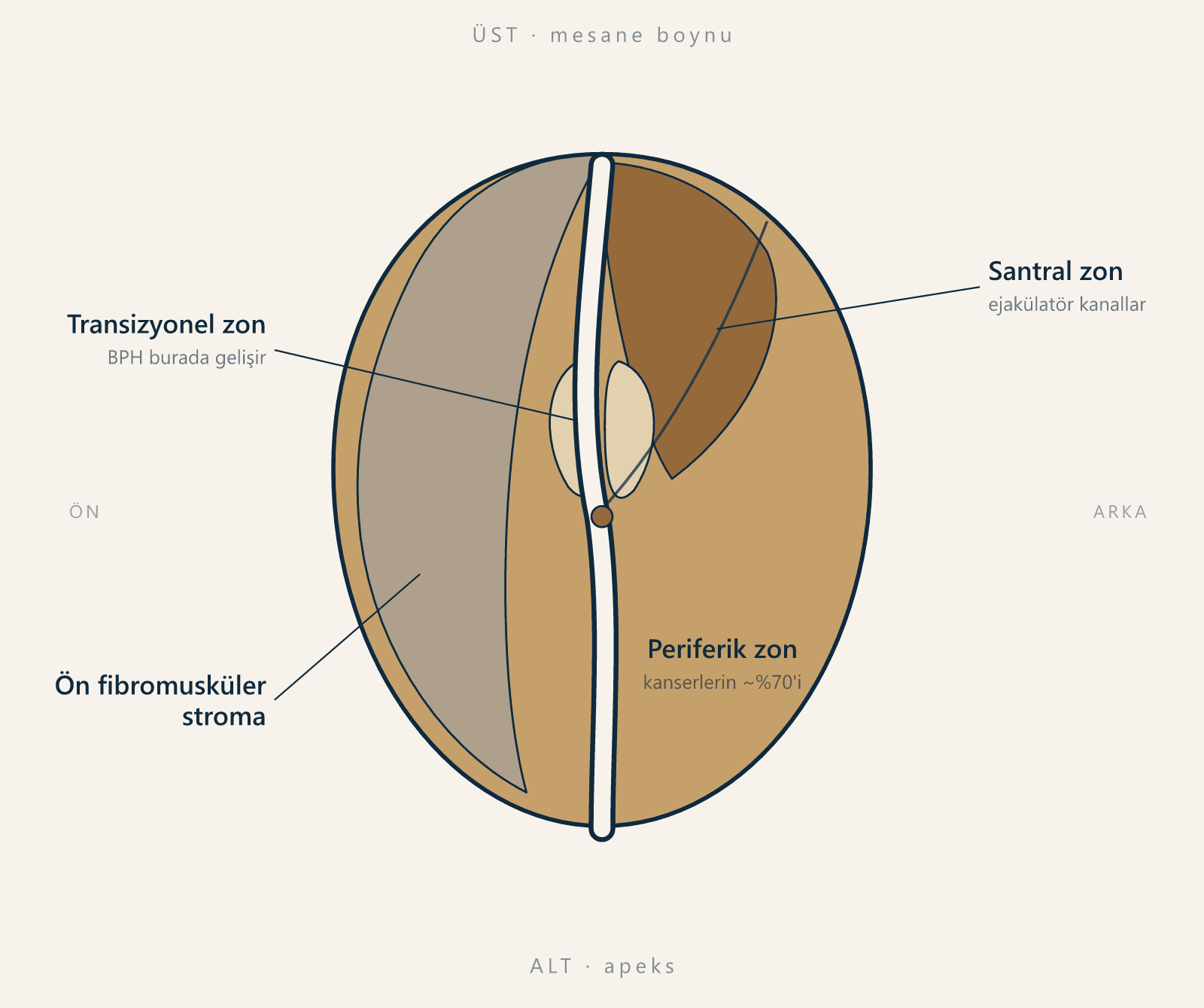
Prostate cancer occurs when cells in the prostate gland multiply uncontrollably. Cancer most often starts in the outer part of the prostate (the peripheral zone) — this is different from the inner region where benign enlargement (BPH) develops.
An important feature of prostate cancer is that it often progresses slowly. In many patients the cancer stays silent for years and does not threaten life. However, some types can be aggressive. The aim, therefore, is to catch the aggressive kind early while protecting slow-growing ones from unnecessary treatment.
In the early stage, prostate cancer causes almost no symptoms. That is why early diagnosis relies on regular PSA checks and examination done without waiting for complaints. In prostate cancer caught early, the treatment success rate is very high.
Prostate cancer most often begins in the peripheral zone, which makes up the outer part of the prostate. Benign enlargement (BPH), on the other hand, develops in the transition zone around the urethra — this is why the two are separate diseases.
Early prostate cancer is silent. The symptoms below usually appear in advanced disease — which is why screening without waiting for symptoms is important.
Weak flow, frequent urination, straining. However, these symptoms mostly belong to benign enlargement (BPH).
Blood seen in the urine or semen is a finding that needs to be investigated.
Persistent pain in the lower back, hip or back can point to bone involvement in advanced disease.
New-onset erectile dysfunction may rarely accompany it; it can also have other causes.
Unexplained weight loss and weakness are general symptoms that can be seen in advanced disease.
The most important message: early cancer causes no symptoms. That is why regular PSA checks save lives.
Diagnosing prostate cancer proceeds step by step. The aim is to avoid unnecessary procedures while not missing significant cancer.
A blood PSA measurement and a digital rectal exam form the basis of the first assessment.
In suspicious cases, prostate MRI shows risky regions and reduces unnecessary biopsies.
When needed, an MRI-guided targeted prostate biopsy provides a definitive diagnosis and determines the grade of the cancer.
In necessary cases, additional imaging assesses whether the cancer has spread; treatment is planned accordingly.
The most common questions about PSA, screening age and treatment decisions.
No. A high PSA can also be due to benign enlargement, infection (prostatitis) or recent sexual activity. A high PSA only shows that further assessment is needed; on its own it does not diagnose cancer.
In general, PSA checks are recommended from age 50. If there is a family history of prostate cancer or you are in a high-risk group, this age can be brought down to 45. We determine the most appropriate screening plan together.
No. In low-risk, slow-growing cancers, "active surveillance" can be preferred — that is, close follow-up instead of immediate treatment. The treatment decision is personalized according to the grade and stage of the cancer, your age and your preferences.
Depending on the type of treatment, erectile function and urinary control can be affected. Modern nerve-sparing surgery and advanced radiotherapy techniques reduce these risks. Possible effects are discussed openly before treatment.
In early-stage cancers confined to the prostate, the treatment success rate is very high and long-term survival rates are quite good. This is why regular check-ups done without waiting for symptoms are of great importance.
In prostate cancer, early diagnosis changes everything. Put your mind at ease with a simple PSA test and examination. You can reach out via WhatsApp for assessment and a preliminary consultation.