Anatomy
Normal prostate and the enlarged prostate
The enlarging prostate presses on the urethra that passes through it and narrows urine flow. To work against this resistance, the bladder wall thickens over time.
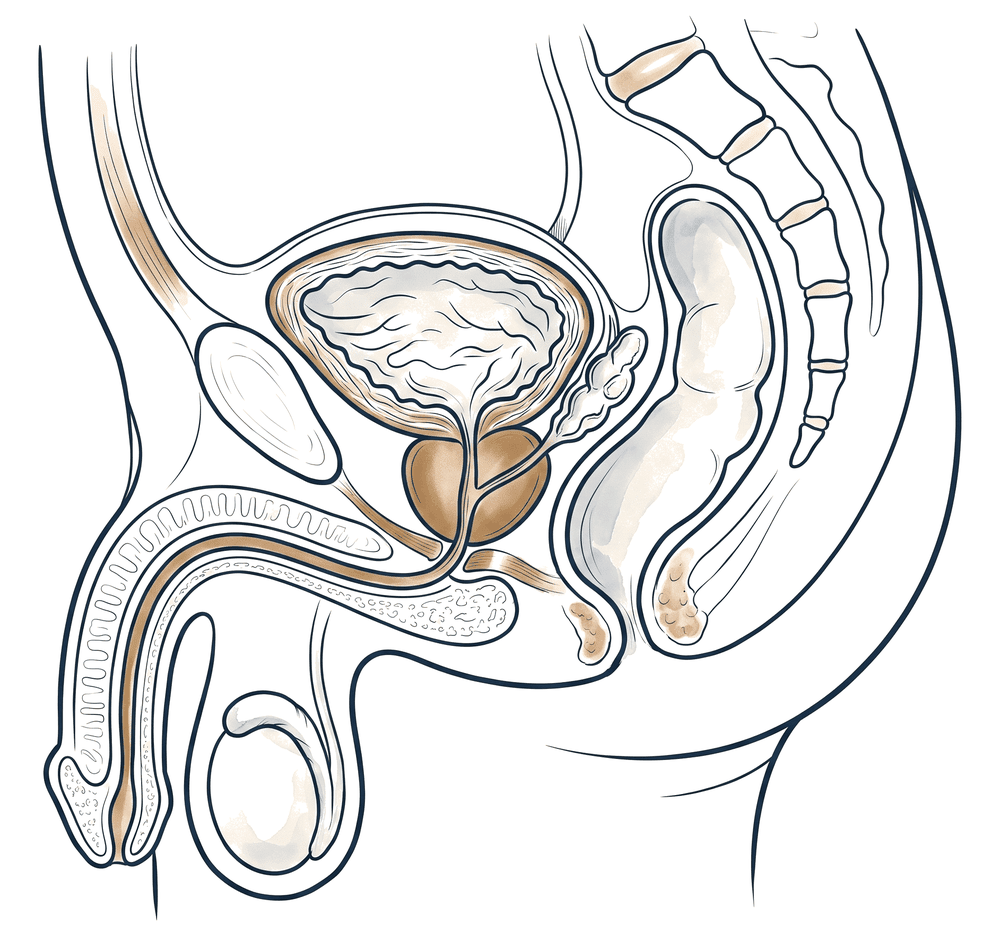
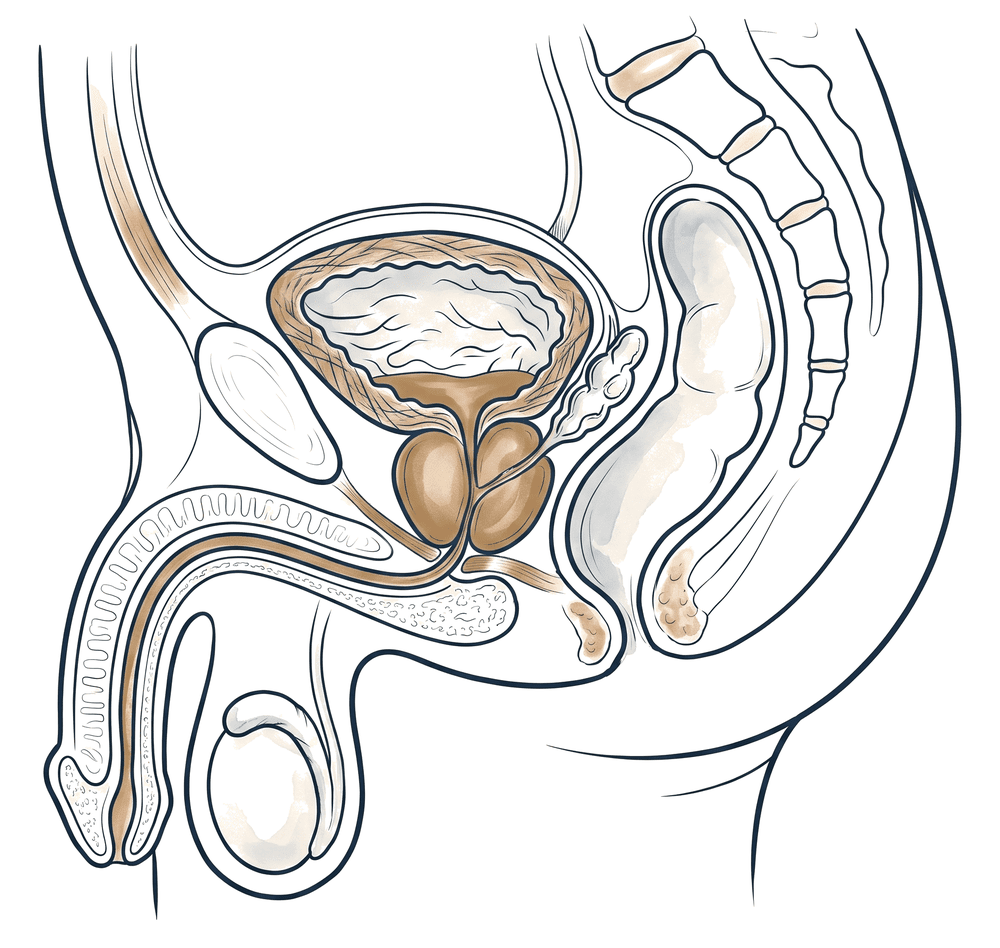
A non-cancerous enlargement of the prostate that develops with age. It is the most common cause of urinary symptoms and can be treated effectively today.
Benign prostatic hyperplasia (BPH) is the non-cancerous enlargement of the prostate gland with age. The prostate is a gland that surrounds the urethra (urinary channel) just below the bladder. As it enlarges, the prostate presses on the urethra and makes urine flow more difficult.
BPH is very common: it is present to some degree in roughly half of men over 50, and in the great majority over 80. "Benign" means it is not cancer; however, it can seriously affect quality of life and, if left untreated, may also affect the bladder and kidneys.
An important point: BPH and prostate cancer are different diseases. BPH develops in the inner part of the prostate (the transition zone), while cancer mostly arises in the outer part (the peripheral zone). One does not turn into the other, but the two can coexist.
The enlarging prostate presses on the urethra that passes through it and narrows urine flow. To work against this resistance, the bladder wall thickens over time.
Known as lower urinary tract symptoms (LUTS), these complaints begin insidiously and increase over time.
The urine stream thins, loses its force and comes in an intermittent, stop-start manner.
Waking once or several times from sleep to urinate (nocturia) — one of the most bothersome complaints.
The need to urinate often, in small amounts, during the day as well.
A sudden, pressing urge to urinate that is hard to postpone.
Having to wait to begin, needing to strain, and dribbling at the end.
The feeling that the bladder has not emptied fully; needing the toilet again shortly after.
The right treatment starts with the right diagnosis. Assessing BPH is done with simple and mostly painless tests.
The severity of complaints is scored with the IPSS questionnaire; its effect on quality of life is assessed.
The PSA value is checked to rule out prostate cancer and monitor prostate health.
Urine flow rate is measured; the urine left in the bladder after voiding (residual) is assessed by ultrasound.
The size and structure of the prostate are examined with a digital rectal exam and ultrasound.
The most common questions about the cancer link, treatment timing and sexual function.
No. BPH is a benign enlargement and does not turn into cancer. The two are separate diseases that develop in different regions. However, because both can be present in the same age group, cancer is also reviewed during assessment with PSA and examination.
Mild complaints may not require urgent treatment; follow-up and lifestyle adjustments may be enough. However, if complaints are progressing, if you struggle to urinate, or if there is urinary blockage/blood/infection, assessment is important.
Medications control the complaints but do not resolve the prostate permanently; when stopped, the complaints return. For patients who want a lasting solution or do not benefit enough from medication, surgical methods such as HoLEP come to the fore.
It depends on the method. Rezum largely preserves sexual function. HoLEP does not affect erections but often leads to retrograde ejaculation (semen flowing backward). These topics are always discussed before treatment.
Progressive BPH can lead to recurrent urinary tract infections, bladder stones, sudden urinary blockage (retention) and, over time, deterioration of kidney function. That is why monitoring the complaints is important.
With simple tests we can clarify the cause of your complaints. Early assessment means both easier treatment and peace of mind. You can reach out via WhatsApp for a preliminary consultation.