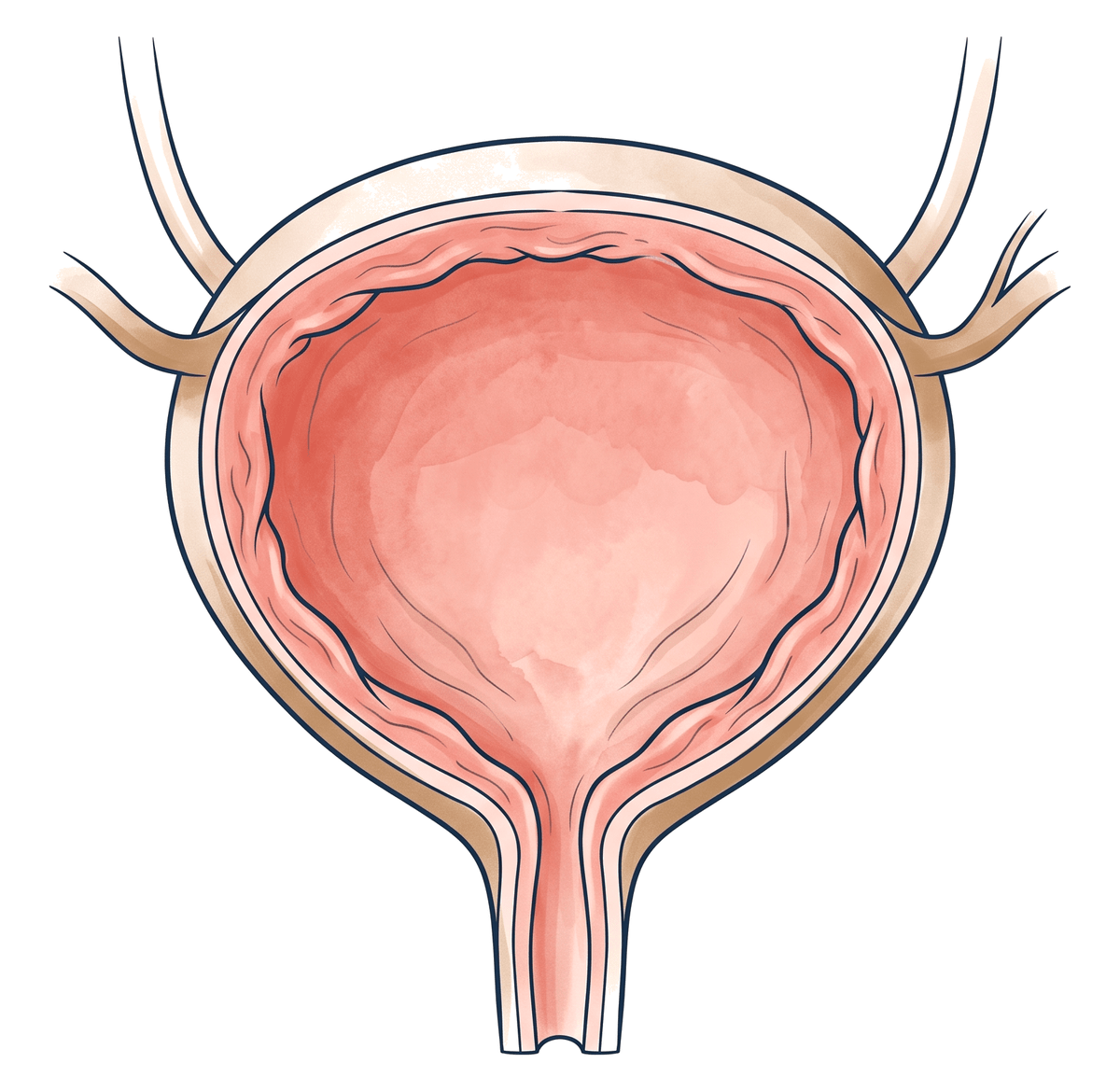
Interstitial cystitis (painful bladder syndrome) is a condition that runs with chronic pain, pressure and frequent urination in the bladder. It is mostly seen in women and is often mistaken for recurrent urinary tract infection — but bacteria do not grow on urine cultures. Because its diagnosis can take time, awareness is important.
What are the symptoms?
- Pain or pressure that increases as the bladder fills and temporarily eases with urination
- Very frequent urination by day and night
- Discomfort in the lower abdomen, groin or pelvic region
- Pain during sexual intercourse
- Complaints flaring up and settling from time to time
How it differs from a urinary tract infection
The symptoms are very similar to a UTI; however, in interstitial cystitis the urine test and cultures are usually clean, and antibiotics provide no lasting benefit. For this reason, this condition should be kept in mind in patients who say "I have a constant infection but treatments don't work."
Interstitial cystitis is not cancer and does not turn into cancer; but it is a chronic condition that can reduce quality of life and can be brought under control with the right management.
What is the cause?
The exact cause is not fully known. It is thought that many factors play a role together, such as disruption of the protective layer on the inner bladder surface, increased nerve sensitivity and inflammatory processes.
How is it diagnosed?
There is no single specific test; the diagnosis is made by excluding other conditions that cause similar complaints (infection, stones, overactive bladder, tumor). The complaints, a voiding diary, urine test and, when needed, an examination inside the bladder (cystoscopy) are used.
Treatment options
A single treatment does not work in everyone; the approach is stepwise and individual:
- Lifestyle and diet: Identifying and reducing the foods/drinks that trigger the complaint (caffeine, acidic/spicy foods).
- Bladder training and stress management: Regulating voiding intervals, pelvic floor relaxation.
- Medications: Oral drugs targeting pain and bladder sensitivity.
- Intravesical and advanced treatments: In selected patients, intravesical applications and other advanced methods.
When should you see a doctor?
See a urologist if you have complaints that look like recurrent infection but do not respond to treatment, with pain that increases as the bladder fills and frequent urination. A correct diagnosis also prevents unnecessary antibiotic use.