Waking once or several times from sleep at night to urinate — nocturia in medical terms — is a complaint men often experience but usually accept as "a normal part of ageing." Yet nocturia seriously disrupts sleep quality, and a correctable cause may lie beneath it.
Is nocturia only due to the prostate?
No — this is the most common misconception. Although prostate enlargement is an important cause, nighttime urination has many different causes:
- Benign prostatic hyperplasia (BPH): Incomplete bladder emptying and a frequent need to urinate.
- Excessive urine production at night (nocturnal polyuria): The body producing more urine than normal at night — for heart, kidney or hormonal reasons.
- Overactive bladder: Early and sudden contraction of the bladder.
- Sleep disorders: Conditions such as sleep apnea can increase nighttime urine production.
- Lifestyle: Late-evening consumption of fluids, caffeine or alcohol.
That is why solving nocturia correctly requires first finding the right cause.
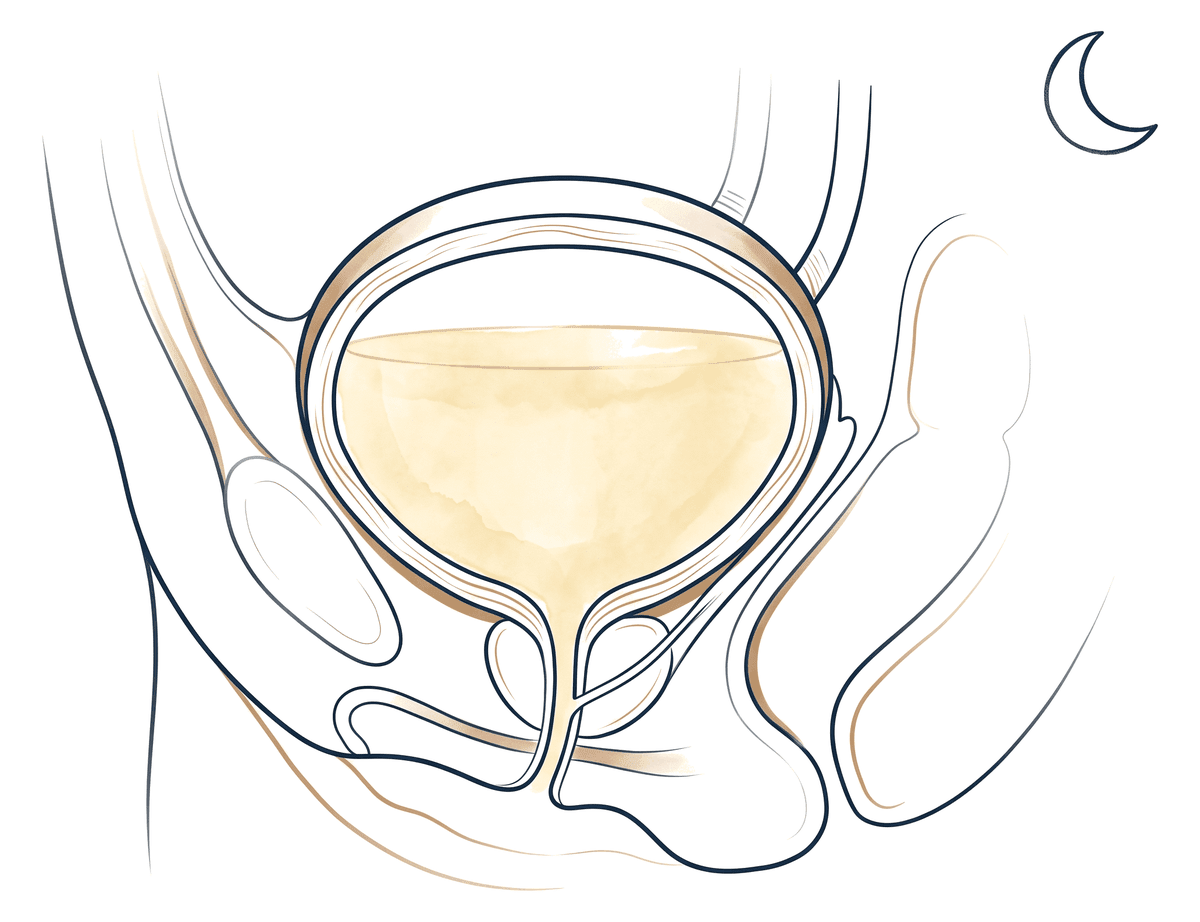
Simple measures you can try at home
In some situations, small changes provide marked benefit:
- Reduce fluid intake in the evening, especially 2–3 hours before bed.
- Limit caffeine and alcohol, especially in the evening.
- If there is swelling in the legs, raising the legs for a while in the late afternoon can reduce nighttime urine production.
- Balance your salt intake.
Getting up once a night is normal for most people. But if you get up twice or more and your sleep is disrupted, this should be assessed.
When should you see a doctor?
Assessment is important in the following situations:
- Getting up two or more times a night and the resulting sleep interruption
- Frequent urination, weak flow or incomplete emptying during the day as well
- Blood in the urine or burning on urination
- Complaints that are progressively increasing
A simple questionnaire, urine test, uroflowmetry and ultrasound often reveal the cause. If it is prostate-related, there are effective options ranging from medication to surgical methods such as Rezum or HoLEP.