Passing a kidney stone is a hard-to-forget experience. But what really matters is preventing a new one from forming after treating the stone: in people with a stone history, recurrence over the years is quite likely if no precautions are taken. The good news is that preventing recurrence is often a matter of habit, not medication.
Why does it recur?
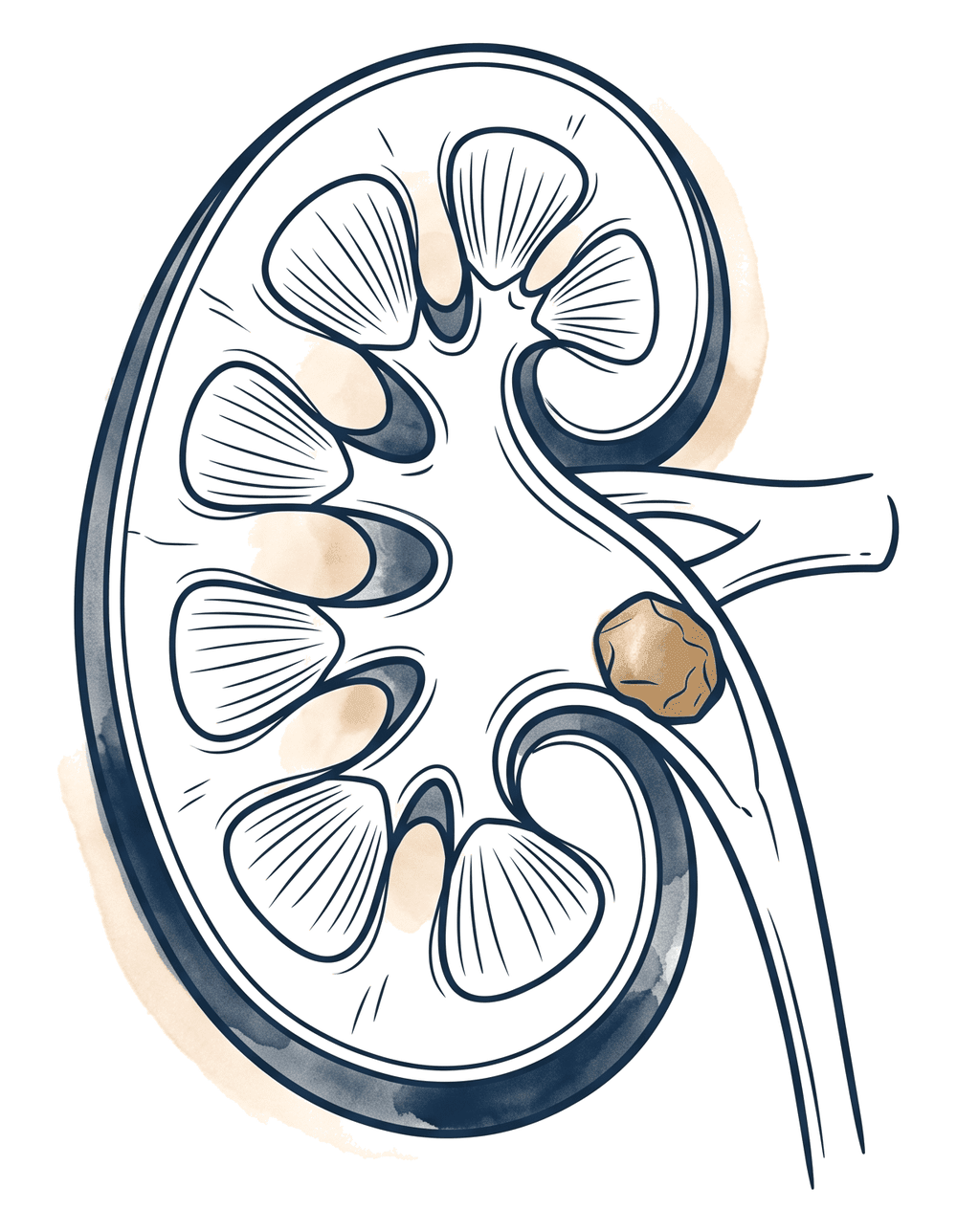
Stones form when certain minerals in the urine concentrate and crystallize. The more concentrated (dark) the urine, the easier crystallization becomes. That is why the most common cause behind stone formation is simple: insufficient fluid intake. Dietary habits, genetic predisposition and some metabolic conditions add to this.
The golden rule of prevention: water
The most effective and easiest step in preventing stones is taking adequate fluids. The goal is to pass plenty of light-colored urine by drinking 2–3 liters of fluid a day. A practical indicator: if your urine is mostly a light straw color, your fluid intake is probably adequate. If it is dark yellow, you should drink more water.
- Spread the water across the day; drink at regular intervals, not all at once.
- Increase the amount in hot weather and when you sweat.
- Drink some water in the evening too, to avoid a long spell without fluids at night.
What to watch for in diet?
Reduce salt
Excess salt increases the calcium excreted in the urine and raises the risk of stones. Processed foods, instant soups, pickles and overly salty snacks are the main sources of salt.
Balance animal protein
Too much red meat and animal protein can make the urine favorable for stone formation. A balanced, vegetable-heavy diet is protective.
Don't be afraid of calcium
Contrary to a common misconception, cutting the calcium you get from food is often harmful, not helpful. Consuming a normal amount of dairy can reduce the risk of stones by binding oxalate in the intestine. Use calcium supplements only on a doctor's advice.
The essence of preventing stones is not complicated: plenty of water, little salt, a balanced diet. This trio is the strongest protection for most patients.
Knowing the type of stone helps
If you kept the stone you passed, having its content analyzed is very valuable. The type of stone (calcium oxalate, uric acid, etc.) determines the measures specific to you. In recurrent stones, the metabolic assessment done with blood and urine tests reveals the underlying cause, and targeted medication is planned when needed.
When should you see a doctor?
Don't delay with symptoms such as severe flank pain, blood in the urine, fever or inability to urinate — especially if there is fever, this is an emergency. Also, if you have passed a stone more than once, be sure to have an assessment to prevent recurrence.