A cystocele is the sagging of the bladder downward, toward the vagina, as a result of weakening of the pelvic floor muscles and support tissues. It is associated with childbirth, menopause, age and situations that raise intra-abdominal pressure. It is common in women; while mild cases cause no complaints, advanced ones can affect quality of life.
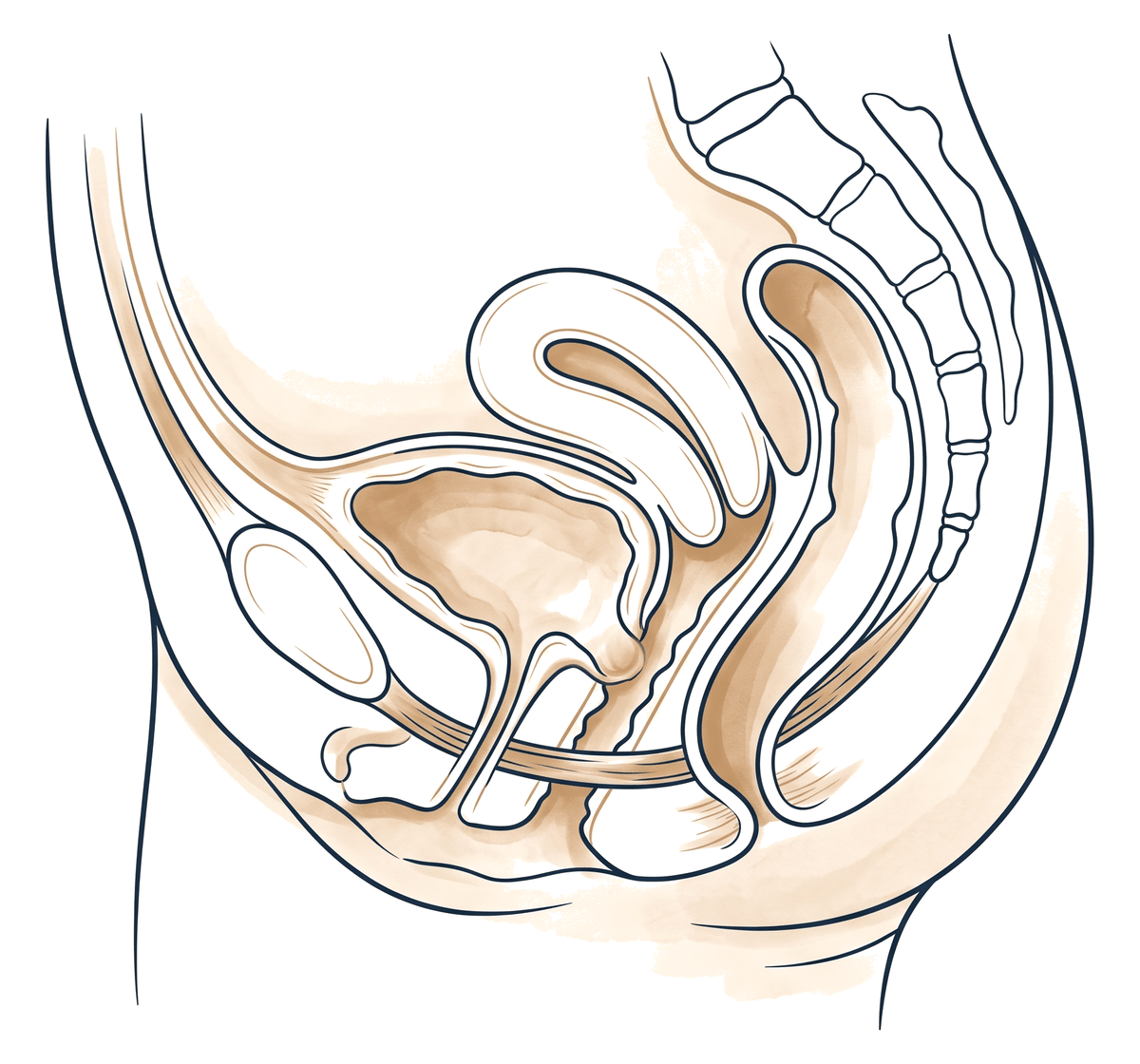
What are the symptoms?
- A feeling of fullness, pressure or "something sagging" in the vagina
- Discomfort that increases after standing for a long time or at the end of the day
- Inability to empty the bladder fully, stop-start voiding
- Urinary incontinence or, conversely, difficulty voiding
- Recurrent urinary tract infections
Why does it happen?
Factors that weaken the pelvic floor play a role: childbirth (especially numerous or difficult deliveries), decreased estrogen with menopause, aging, excess weight, chronic constipation, constant heavy lifting and a long-standing cough.
A cystocele is not a dangerous disease; but if it causes complaints, it can reduce quality of life and can improve markedly with treatment.
How is it diagnosed?
Diagnosis is largely made by examination; the degree of prolapse is assessed. Additional tests (ultrasound, urodynamics) may be needed to see bladder emptying and accompanying urinary incontinence.
Treatment options
Treatment is planned according to the degree of prolapse and the complaints:
- Follow-up: In mild and symptom-free cases, monitoring alone is usually enough.
- Pelvic floor exercises: They strengthen the support muscles; helpful in early and mild cases.
- Pessary: A device placed in the vagina that supports the bladder; an effective option in patients who do not want, or are not suitable for, surgery.
- Surgery: In advanced, symptomatic cases, operations that repair the pelvic floor are performed.
In the menopausal period, in suitable patients, local estrogen support can help strengthen the tissues.
When should you see a doctor?
See a urologist if you have a feeling of fullness/prolapse in the vagina, difficulty emptying the bladder, urinary incontinence or recurrent infection. Early assessment increases the chance that simple methods such as exercise will work.