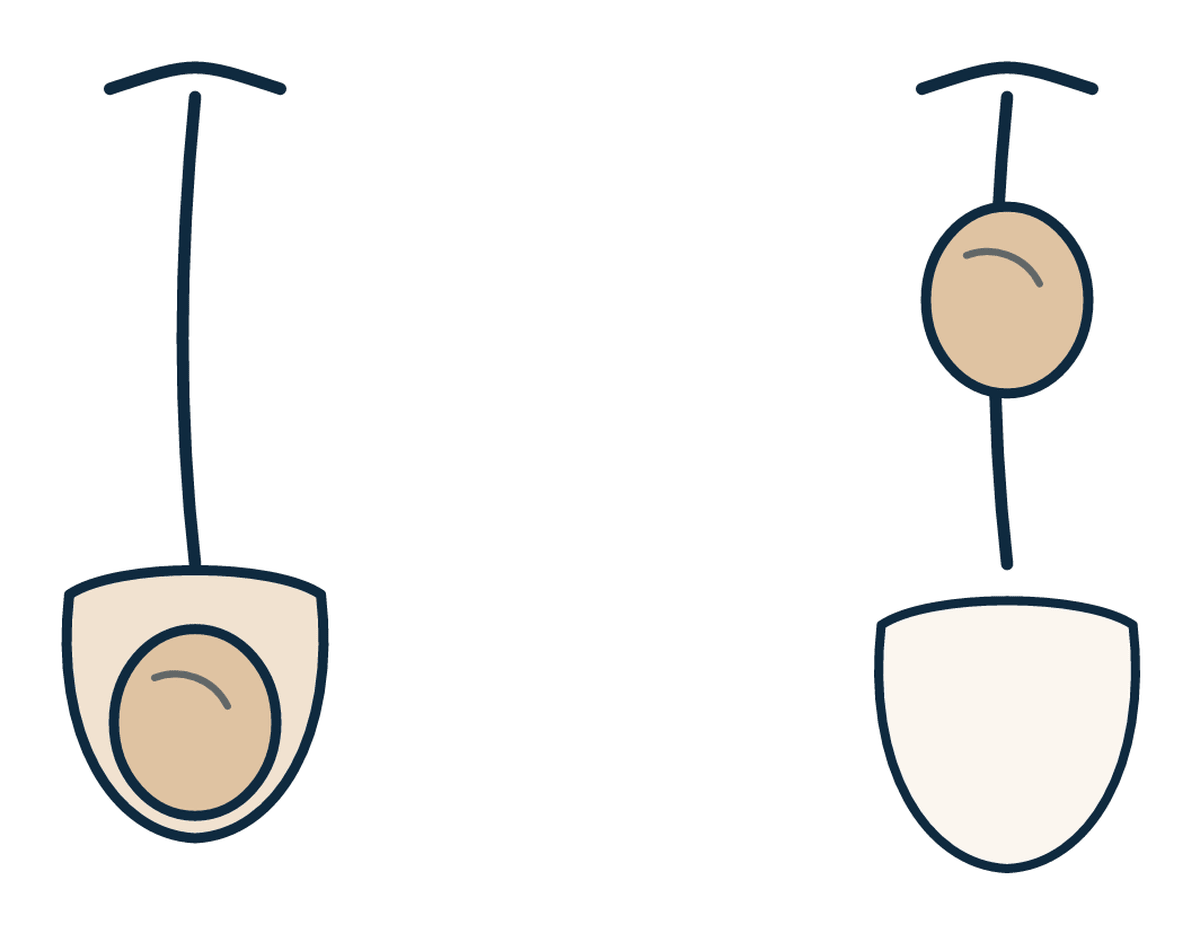
An undescended testicle (cryptorchidism) is when the testicle, which should descend into the scrotum before birth, remains in the inguinal canal or inside the abdomen. It is common in male infants, especially those born prematurely. It is usually painless and is noticed on examination; however, treating it in time is important.
Why does it matter?
Testicles need the scrotal environment, which is slightly cooler than the body, for healthy sperm production. If an undescended testicle is exposed to high temperature for a long time, sperm production and fertility can be affected later. In addition, an undescended testicle is also associated with situations such as a later risk of testicular cancer and inguinal hernia. For this reason, follow-up and, when needed, treatment are important.
Does it descend on its own?
The testicle can descend on its own in the first months of life. However, after a certain month, the likelihood of spontaneous descent decreases. That is why it is monitored in the first months; if it does not descend, treatment is planned.
In an undescended testicle, the aim is to place the testicle in the scrotum in time, both to preserve its function and to make future examination (cancer monitoring) easier.
How is it diagnosed?
Diagnosis is largely made by examination; the location of the testicle is assessed. In non-palpable testicles (which may be inside the abdomen), additional imaging or assessment may be needed. In some children the testicle occasionally slips up (a retractile testicle); this situation must be distinguished from a true undescended testicle.
Treatment: orchiopexy
The treatment of an undescended testicle is surgical and is called orchiopexy: the testicle is found in the inguinal region, brought down into the scrotum and fixed. It is generally recommended after a certain age (when the expectation of spontaneous descent decreases) and, if possible, at an early stage; early treatment provides an advantage for preserving testicular function.
Follow-up after treatment
After the procedure, the development of the testicle is monitored. In men with a history of an undescended testicle, the habit of self-examination at later ages is important — because it has follow-up value in terms of testicular cancer.